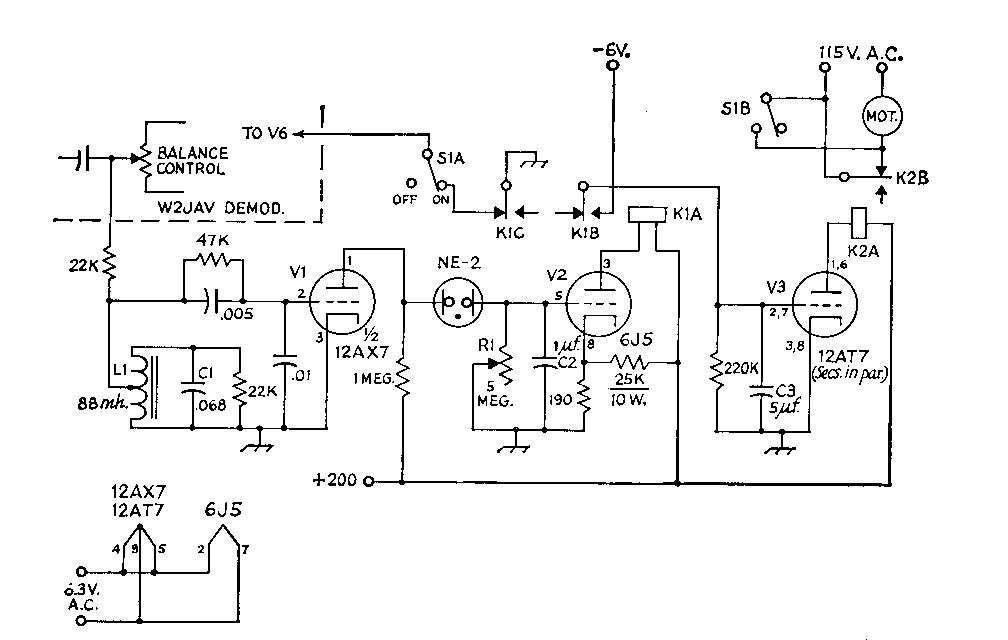
The W2JAV was a tube-based FSK demodulator that was widely used by amateur RTTY operators before the solid-state Mainline series appeared in 1964. This documentation covers a mark-hold and motor-start adapter circuit for the W2JAV, written by L. G. Dedel WA2MSY.
The adapter uses two relays and three tubes to shut off the teletype motor when no mark signal is present, preventing the machine from running open on noise. A tuned 2125 Hz mark filter provides sharp selectivity. The article was written for W2JAV owners who preferred to modernize their existing unit rather than build a new solid-state design.
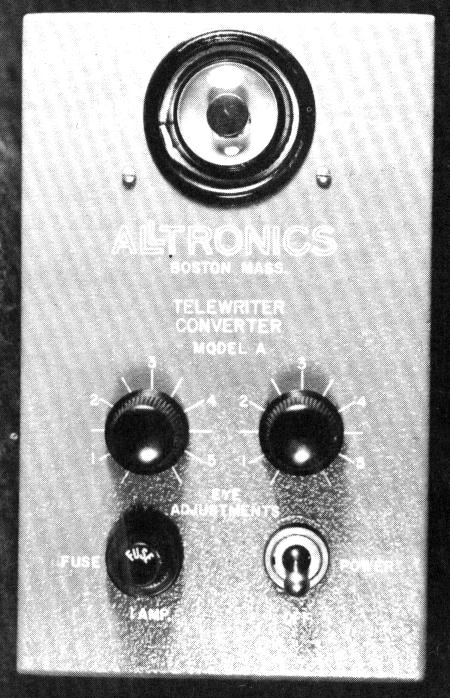
The Alltronics Model-A was one of the earliest commercially available receiving converters for amateur RTTY. Introduced in 1955, it provided a straightforward path for amateurs to interface a surplus teletype machine to a communications receiver without building a terminal unit from scratch.
The unit accepted audio from a receiver and produced the current loop signals required to drive a standard teletype machine. Documentation includes the schematic and operating notes as originally published.
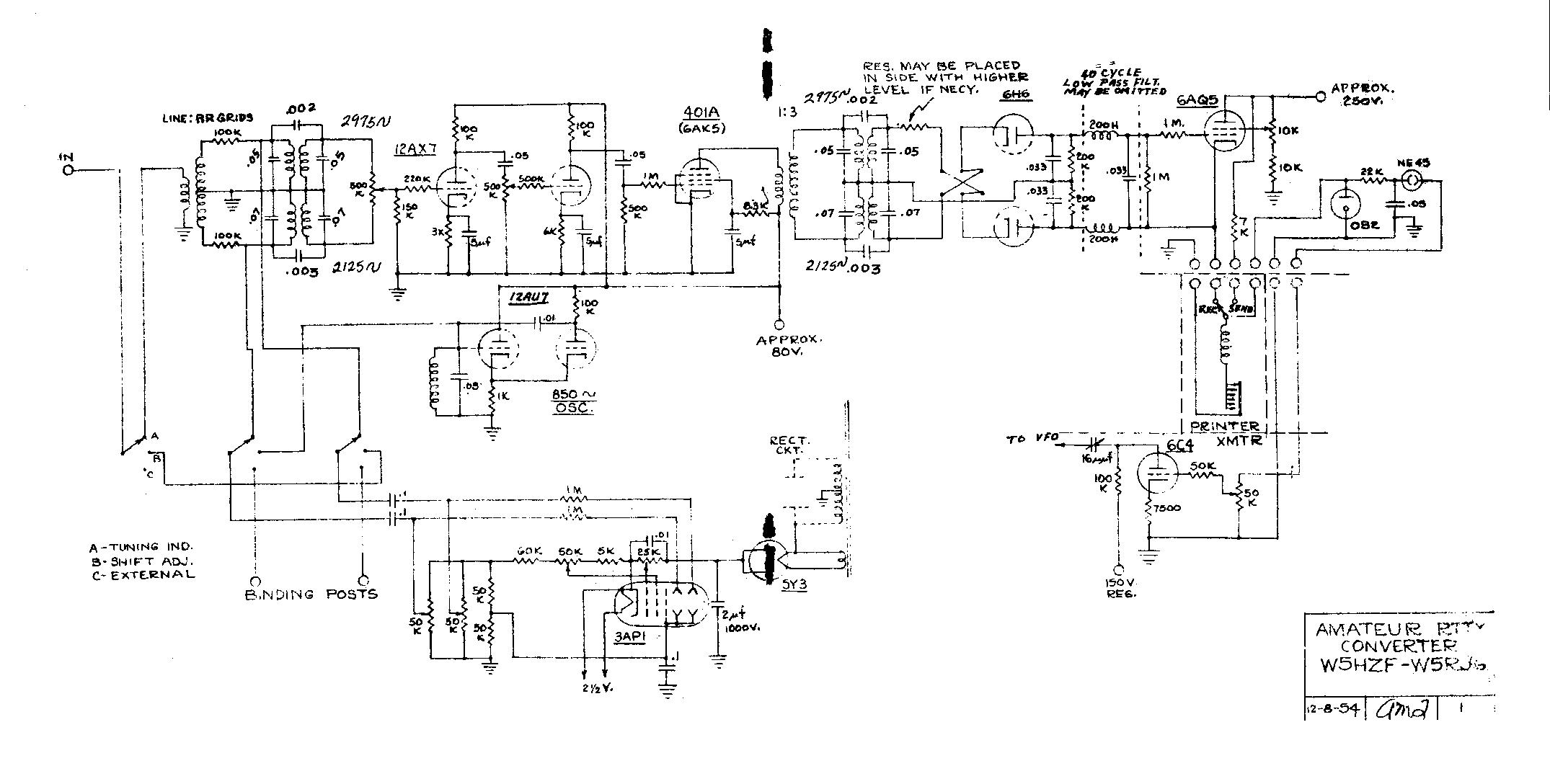
This converter design by W5HFZ and W5RJG appeared in 1955 and represented an early homebrew approach to amateur RTTY demodulation. Like the Alltronics unit of the same era, it was designed to interface a communications receiver to a surplus teletype machine using readily available components.
The documentation preserves the original circuit and construction notes as published.
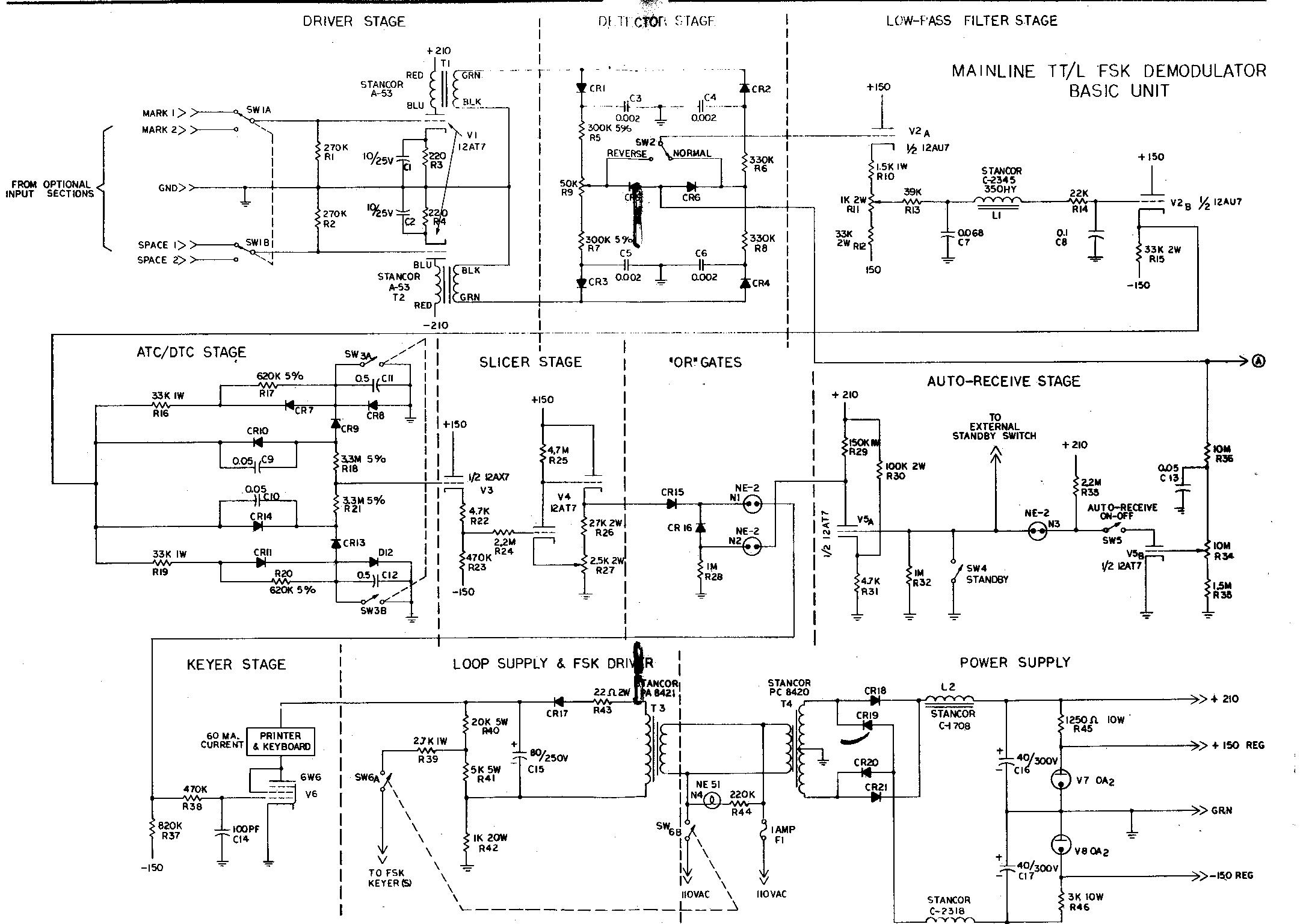
The TT/L (Transistor-Transistor Logic) FSK Demodulator was the first of the Mainline series, published in 1964. Designed by Irv Hoff K8DKG and Keith Petersen W8SDZ, it marked a transition from the tube-based designs of the 1950s to solid-state circuitry using TTL logic devices that were just becoming commercially available.
The TT/L established the design approach that Hoff would refine through the ST-3, ST-5, ST-6, and UT-2 over the following decade. Documentation includes the complete schematic, parts list, and construction notes.
The ST-3 (Solid-state Teletype, version 3) was published in 1970 and became one of the most widely built amateur RTTY terminal units of its era. Irv Hoff W6FFC refined the TT/L design into a more accessible construction project, with improved sensitivity and better performance on marginal signals.
The ST-3 used a phase-locked loop approach to FSK detection, which gave it superior performance compared to discriminator-based designs on noisy or drifting signals. It remained in popular use well into the 1980s.
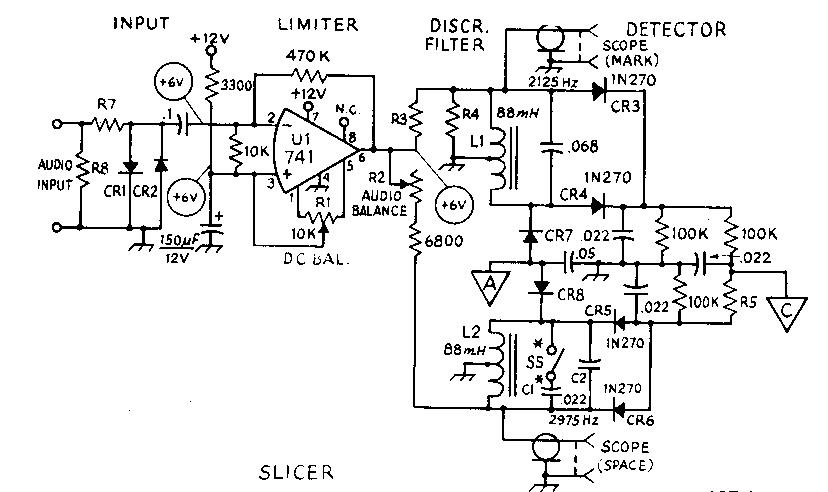
The ST-5 was published alongside the ST-3 in 1970 as a higher-performance variant. An updated version followed in 1973 incorporating improvements based on operator experience with the original design. The 1973 update is sometimes referred to as the ST-5a.
Both versions are documented here. The original 1970 design and the 1973 update are presented separately, allowing direct comparison of the changes made between revisions.
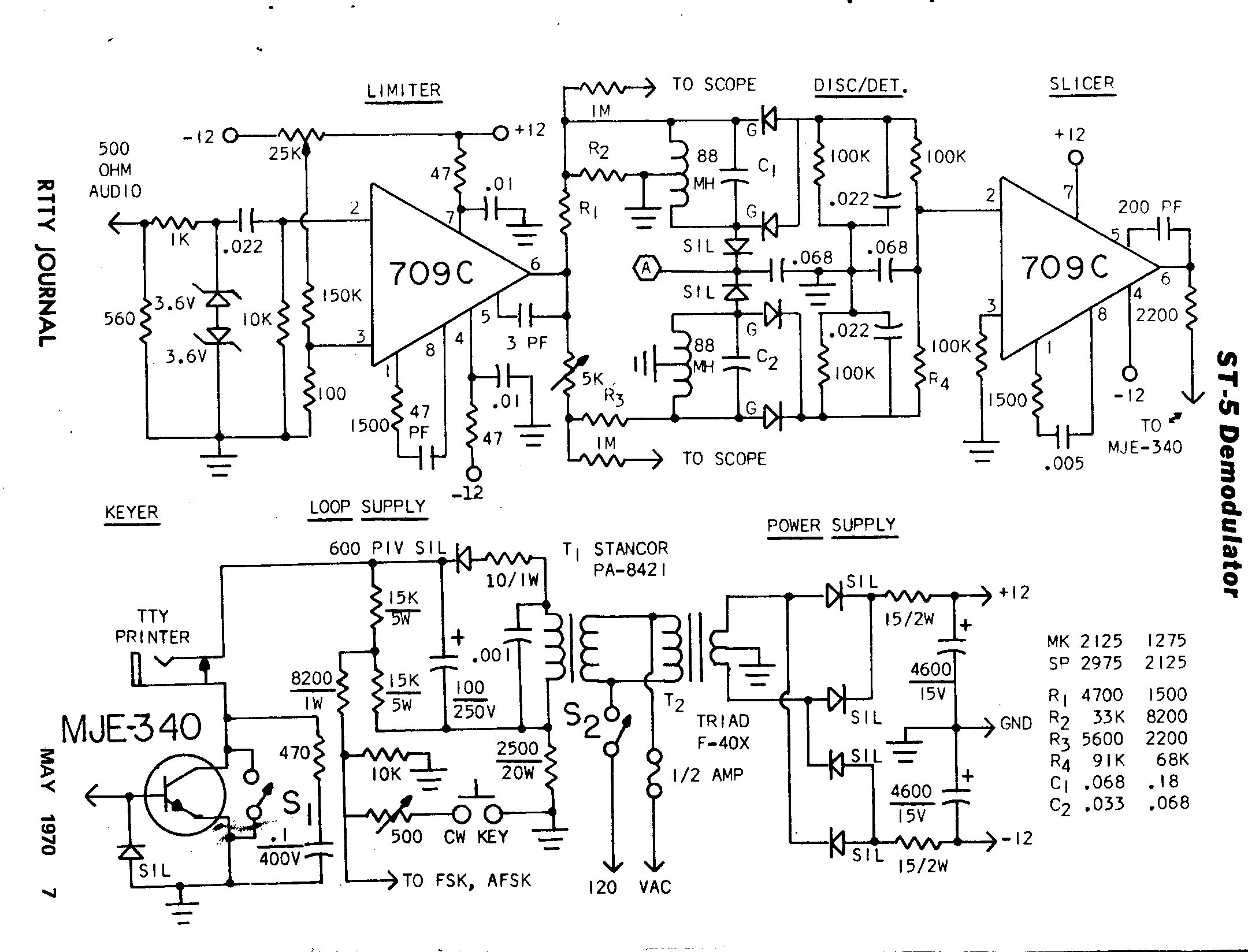
The ST-6 was the third Mainline design published in 1970, positioned as the top-of-line unit in the series. It offered additional features and improved performance over the ST-3 and ST-5, at the cost of somewhat greater construction complexity.
The ST-6 was notable for its RS-232 output option, which allowed it to interface directly with computer terminals and early personal computers in addition to mechanical teletype machines. This made it a transitional design bridging the mechanical and digital eras of RTTY.
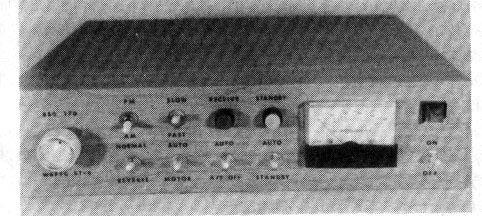
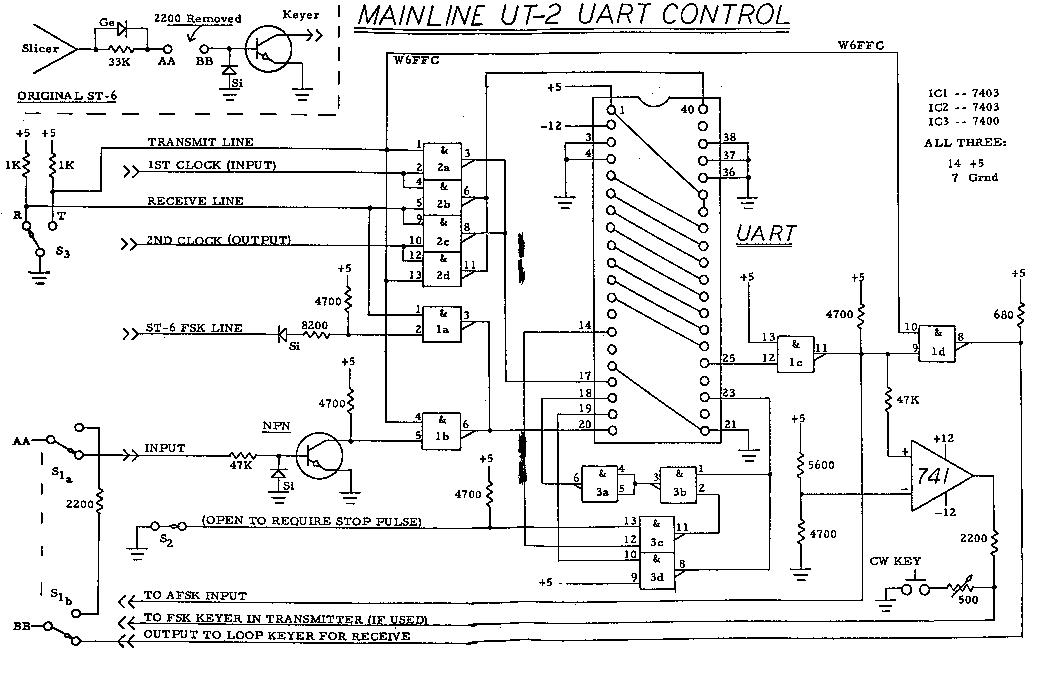
The UT-2 was Irv Hoff’s final Mainline design, published in 1975. It incorporated the accumulated experience of a decade of Mainline designs into a refined, high-performance unit suitable for both mechanical teletype machines and computer interfacing.
Documentation includes the complete schematic and construction details as originally published.
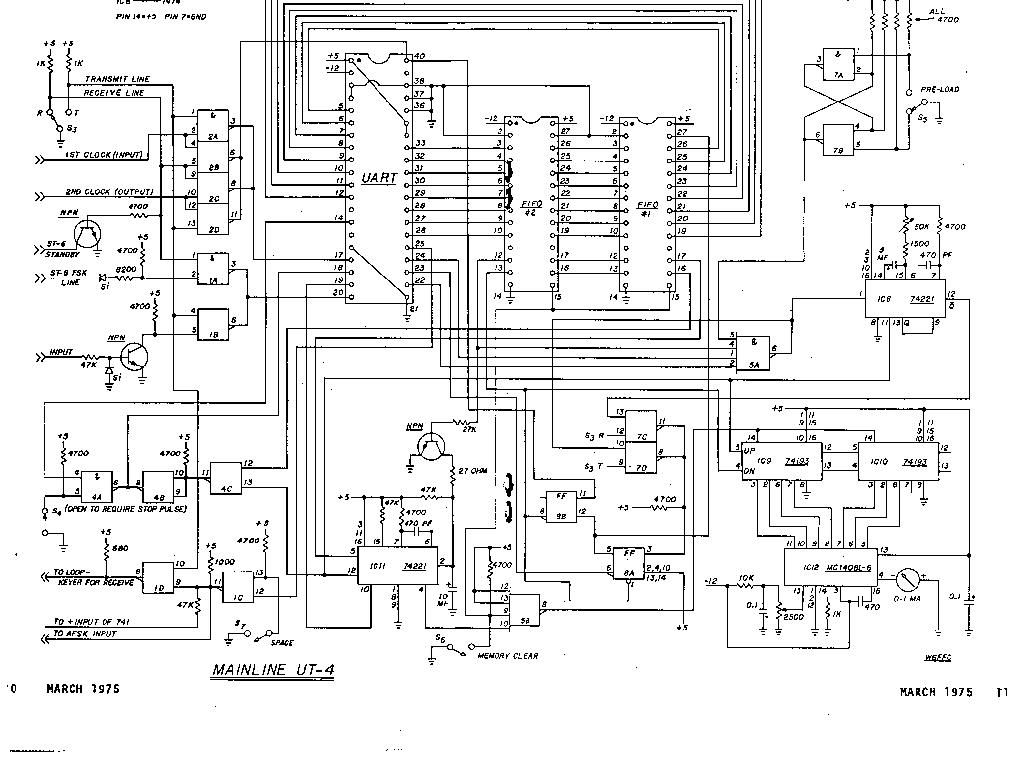
The UT-4 is Irv Hoff’s FIFO buffer companion to the UT-2, published in March 1975. It adds 80-character buffer storage to the UT-2’s UART-based design, allowing the operator to type at a comfortable hand speed while the output is delivered at a steady, uniform rate — virtually eliminating character loss from over-run.
A status indicator (meter or lamps) shows the current buffer fill level. An integral delay system lets the operator select the output Baud rate independently of typing speed. With the optional Transmitter Distributor control, a CQ tape can be sent at exactly the speed the operator intends to hand-type during the QSO. Documentation includes the full schematic, the optional T.D. control, and the optional D/A converter for the status indicator.
The DT-500 and DT-600 were commercial FSK demodulators manufactured by Data Technology Associates in 1977. They occupied the market between the amateur homebrew designs of the Mainline series and the professional commercial units, offering a factory-built alternative at a moderate price.
Documentation is from a 1977 technical memorandum covering both models, including circuit description, alignment procedure, and specifications.
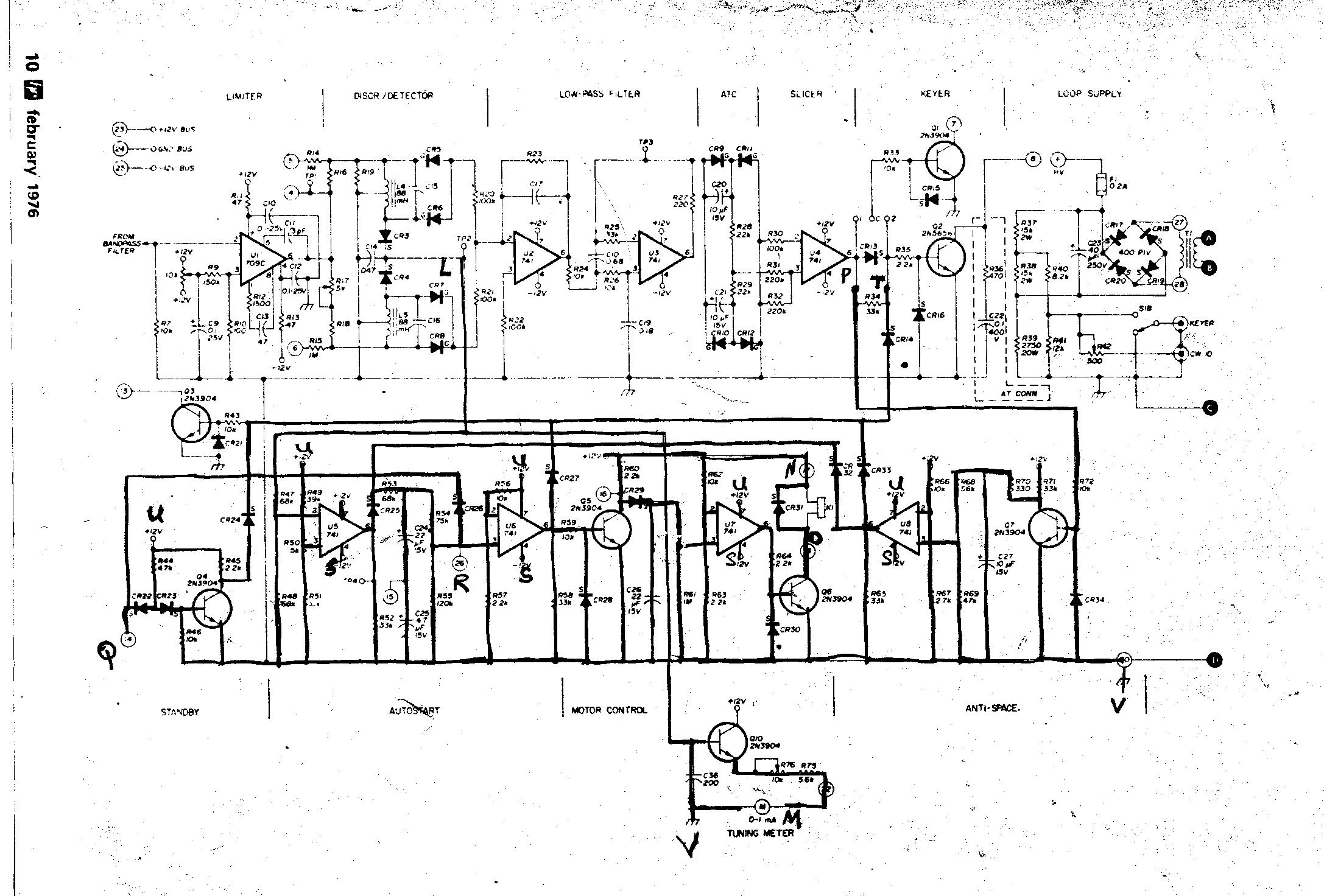
The Frederick Electronics 1632 was a commercial terminal unit produced by Frederick Electronics Corporation, a company that also published Irv Hoff’s Introduction to Amateur Radio Teletype. The 1632 was a popular factory-built alternative to the Mainline homebrew designs for operators who preferred a ready-made unit.
Documentation is available as a PDF containing the full technical reference for the 1632.
The RTTY-CW-800A was a multi-mode terminal unit capable of handling both RTTY and CW (Morse code) signals. It offered operators a single unit for both modes, which was a practical advantage in a shack where both modes were used.
Technical documentation is preserved here in PDF format.
The Model K was an FSK receiving converter designed to interface a communications receiver to a teletype machine. Technical documentation is preserved here in PDF format.