Teletype repairmen and data communications professionals almost always
carried pocket and wallet reference cards listing the codes, character
positions, and signal parameters for the machines they serviced. They
were issued by manufacturers, telephone companies, and training programs
— often trade-show giveaways or badges of honor from technical schools.
The collection below preserves a sample of these cards. Contributions
are welcome; contact W2TTY.
A note on code variants: the five-unit code used by all these machines is ITA2
(International Telegraph Alphabet No. 2), but ITA2 left several figures-shift
positions open for national assignment. The Teletype Corporation cards in this
collection — the Model 28, the 50th Anniversary card, the TypeBox charts
— use the American assignment, known as the Teletypewriter Code
or USTTY. Its signatures are ! on the F-key and the
bell on the S-key. International cards (the UK Post Office and
Telecom Australia entries below) use their respective national arrangements, where
% occupies the F-key and the bell is on J.
The bits transmitted are identical; what appears on paper depends on the
receiving machine’s type basket.
More on ITA2 and USTTY →
Copyright © George Hutchison W7TTY & Bill Bytheway K7TTY. All rights reserved.
Model 28 Teletype Code Card
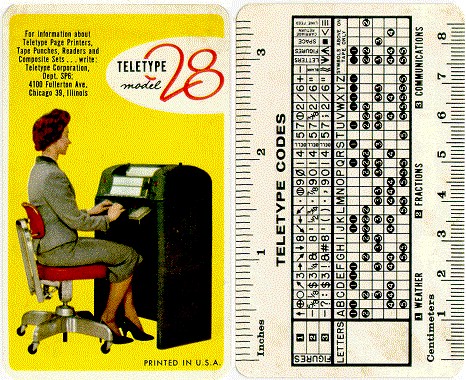
Teletype Model 28 code card — ITA2 in the USTTY (American) figures arrangement
Teletype Corporation 50th Anniversary Code Card
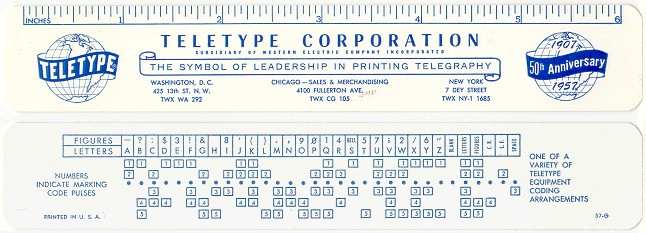
Commemorative code card issued for the Teletype Corporation’s 50th anniversary
Model 35 TypeBox Code Chart
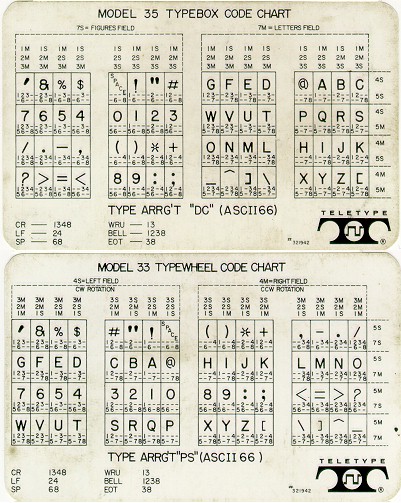
Character code chart for the Teletype Model 35 TypeBox print mechanism
Canadian Pacific — Canadian National Telecommunications Code Card
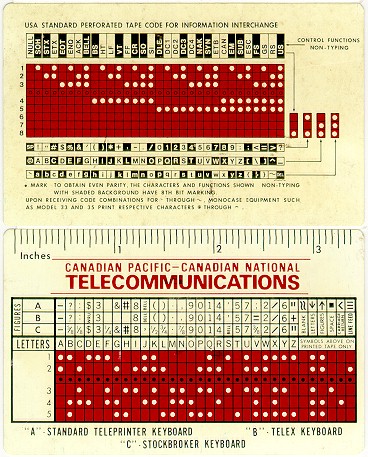
CP/CN Telecommunications code reference card
Model 28 TypeBox Code Chart
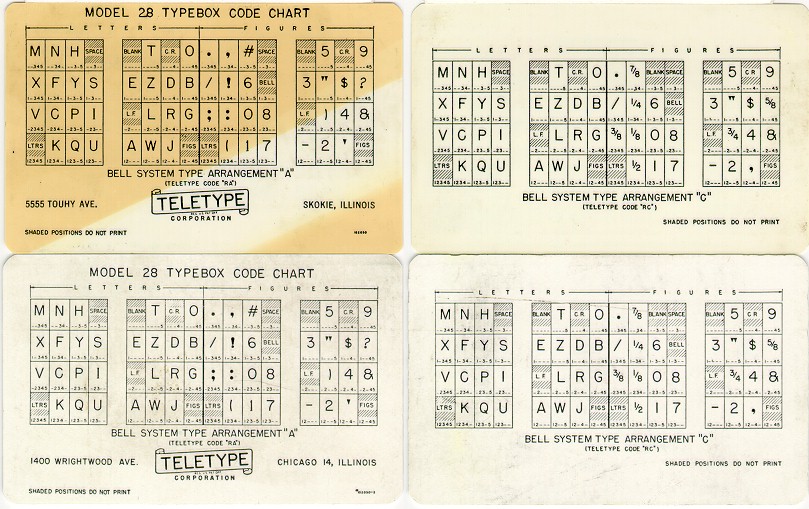
Character code chart for the Teletype Model 28 TypeBox print mechanism
Mergenthaler Composition Systems Code Card
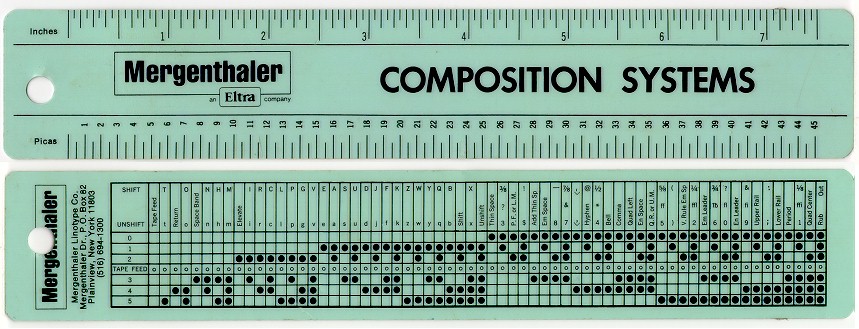
Mergenthaler Linotype Company code reference for composition systems
General Electric Service USASCII Code Chart
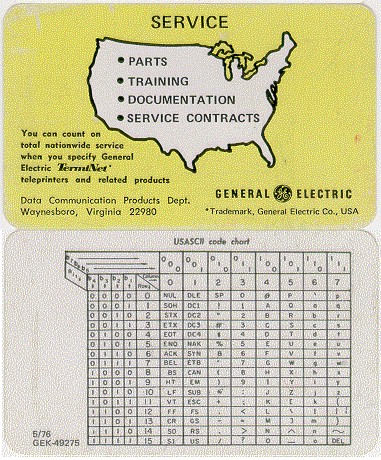
GE Service division ASCII code reference chart
Western Union 1968 ASCII & Five-Level Codes
Contributed by Russ Miller WA3FRP
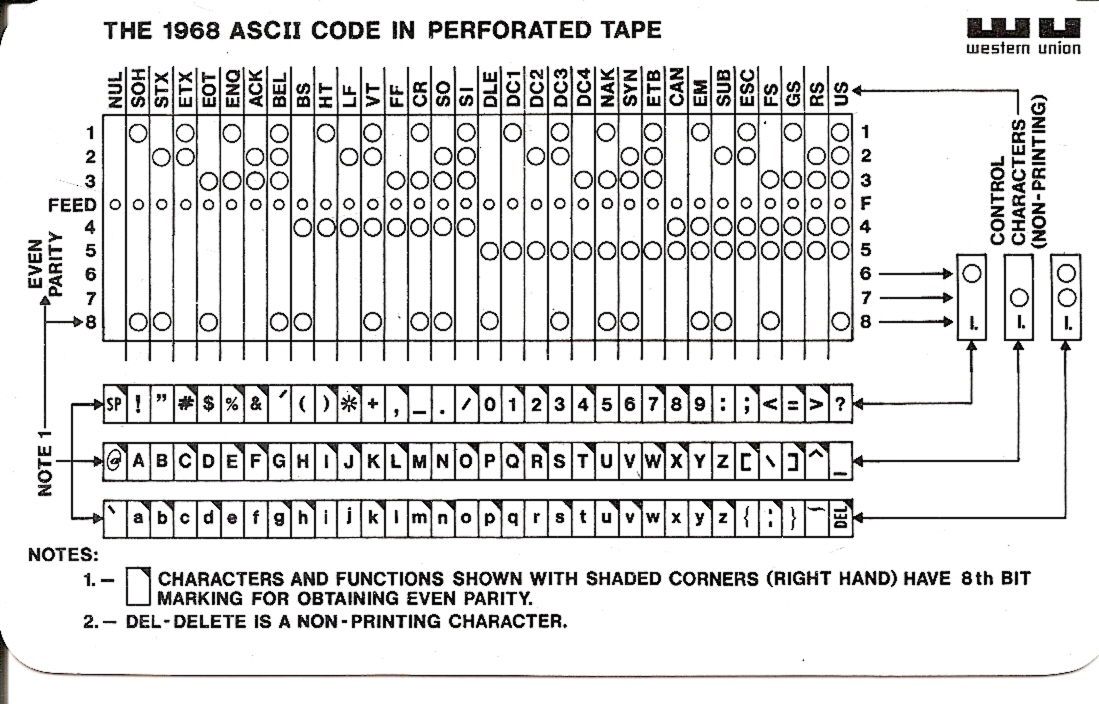
Back — ASCII code table
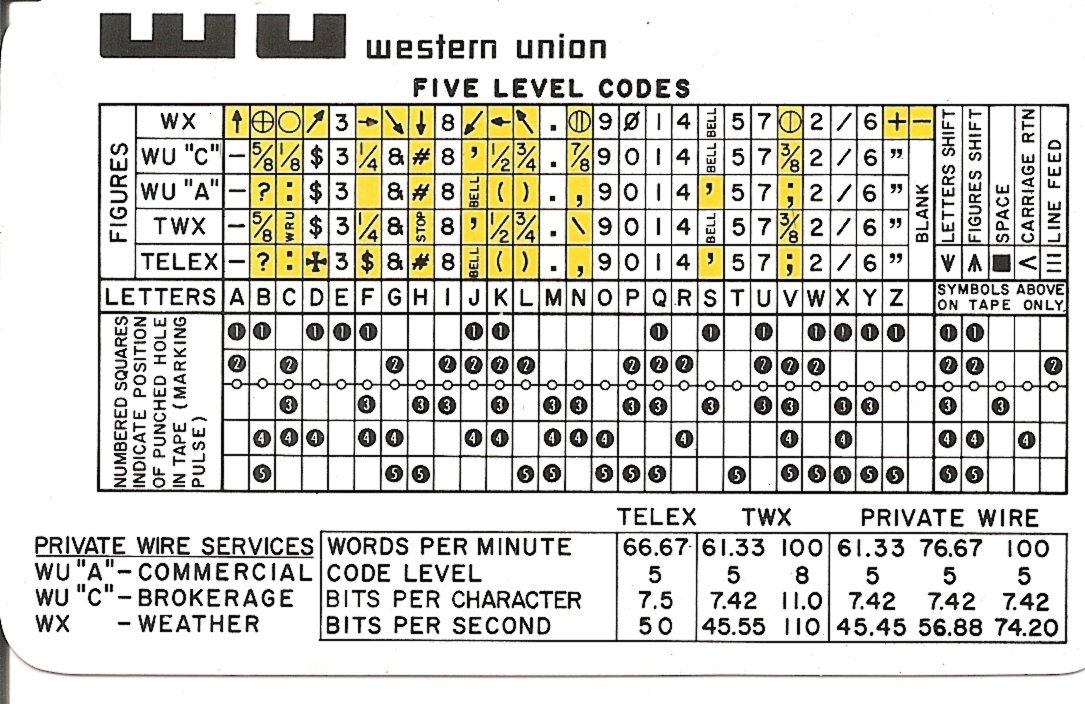
Front — Five-level Baudot and ASCII comparison
United Kingdom Post Office — International Telegraphs Five Unit Slip Reading
Contributed by Larry Rice VK6CP
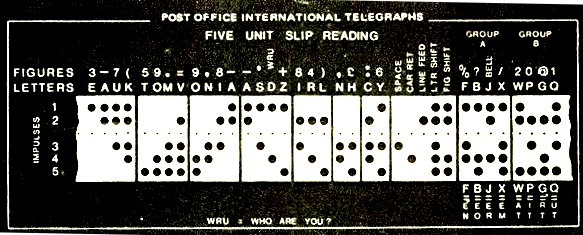
British Post Office ITA2 five-unit code slip-reading reference
Telecom Australia — International Telegraph Code No. 2
Contributed by Larry Rice VK6CP
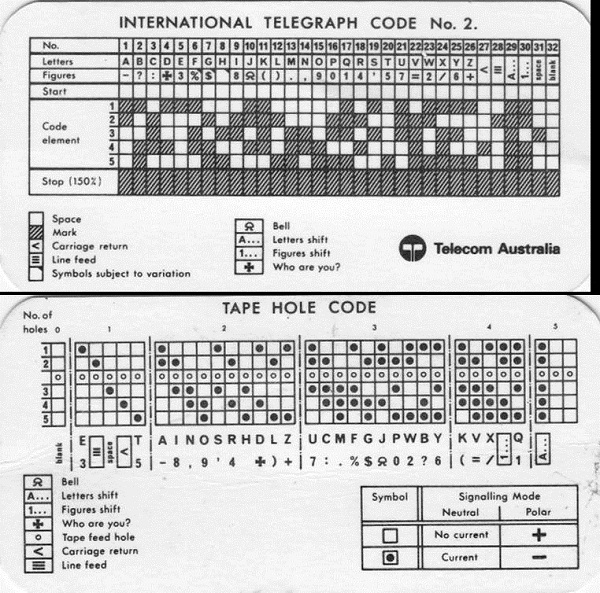
Australian ITA2 (International Telegraph Alphabet No. 2) reference card
Telecom Australia — International Alphabet No. 5
Contributed by Larry Rice VK6CP
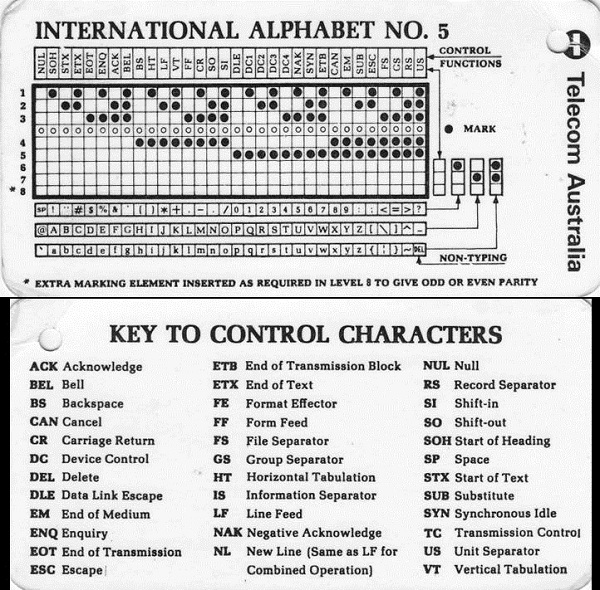
Australian IA5 (ASCII) reference card
Model 33/35 ASCII
Contributed by Steve Ripper
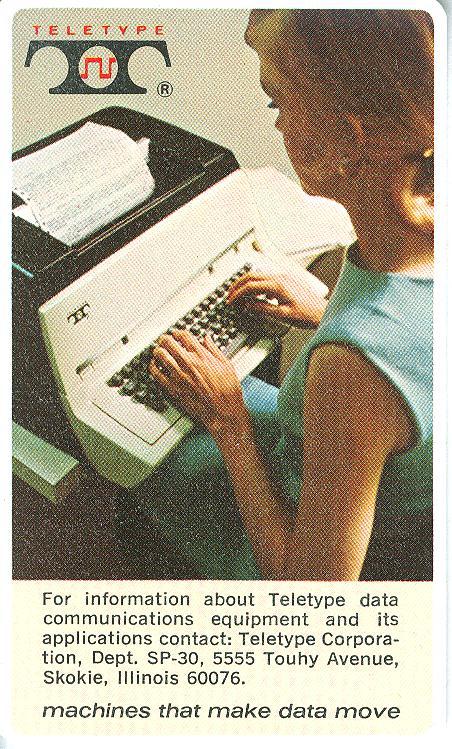
Side A
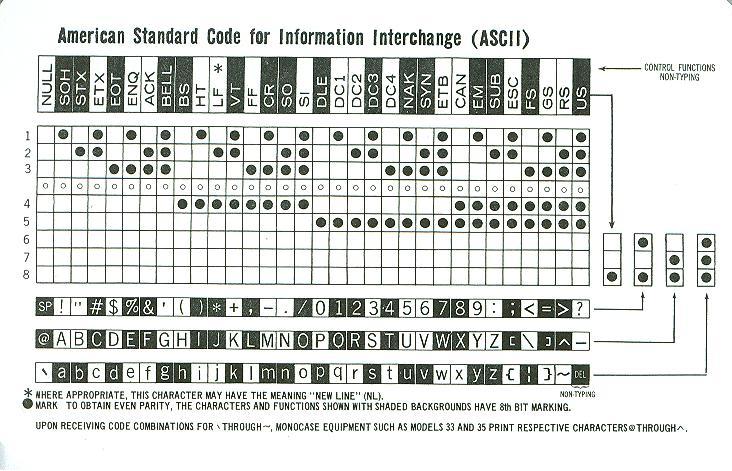
Side B
Model 32 BAUDOT
Contributed by Steve Ripper
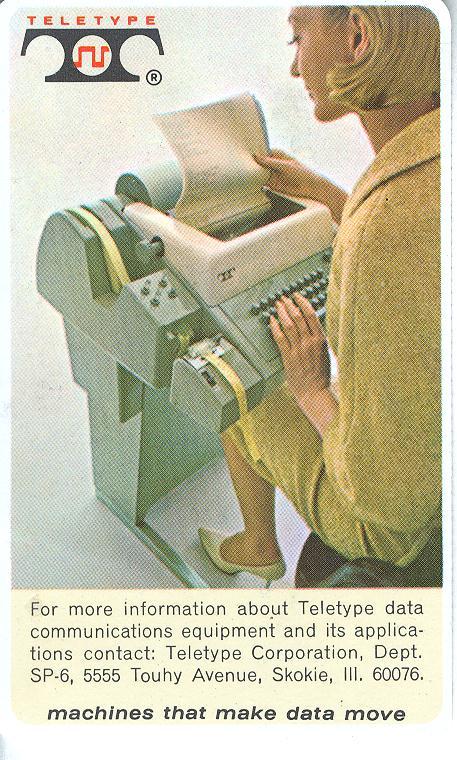
Side A
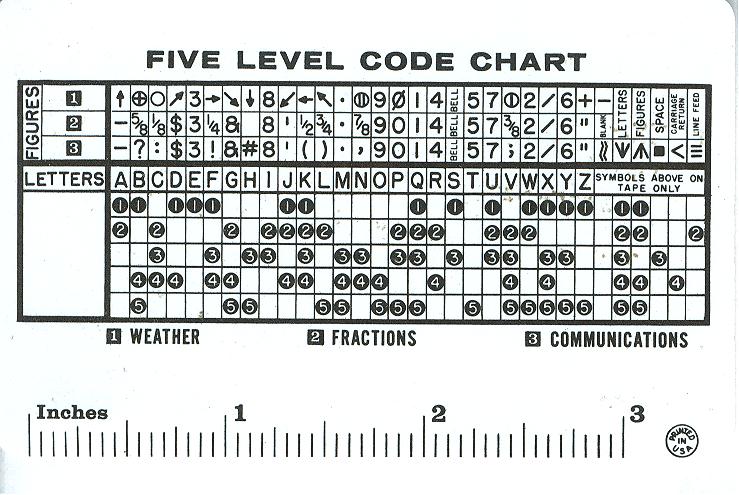
Side B
TermiNet 300 Data Communications Printer
Contributed by Steve Ripper
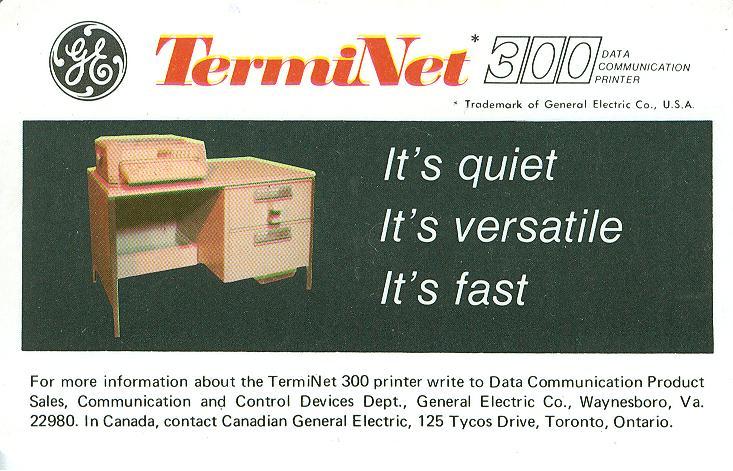
Side A
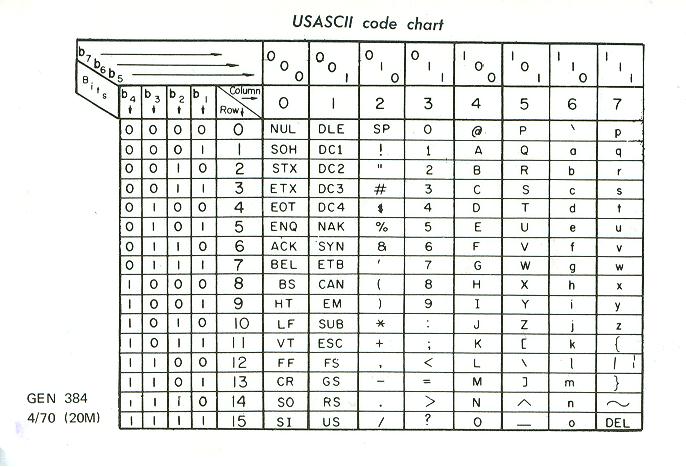
Side B
Western Union Keyboard & 5-Channel Tape Codes
Contributed by Steve Ripper
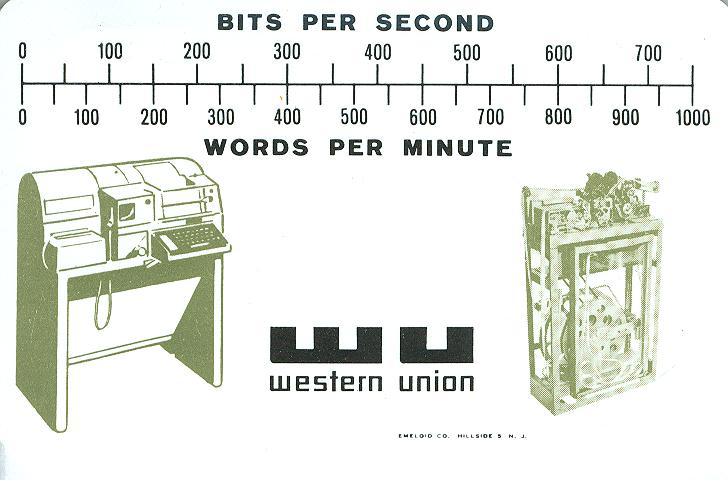
Side B — 5-channel tape code chart
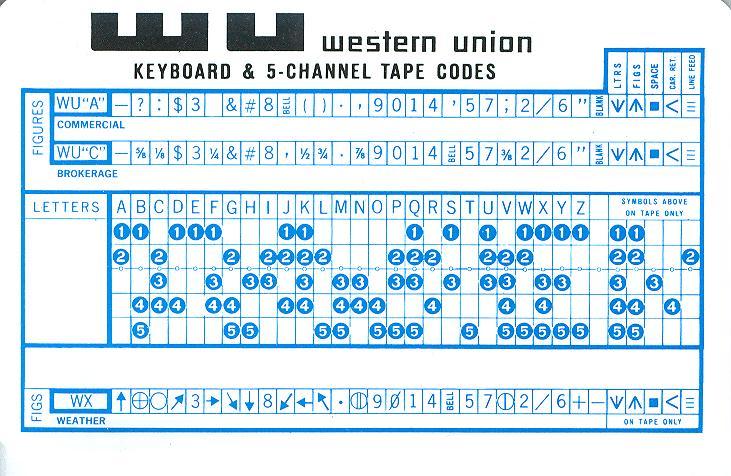
Side A — keyboard layout
Pulse Communications, Inc.
Contributed by Steve Ripper
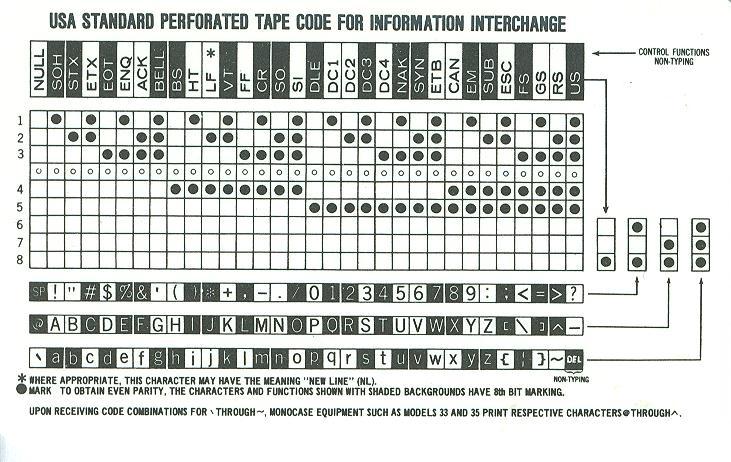
Side B
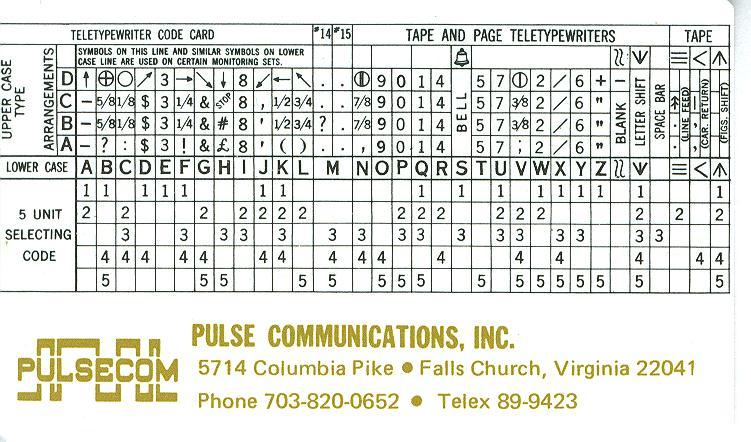
Side A
CNCP Telecommunications
Contributed by Steve Ripper
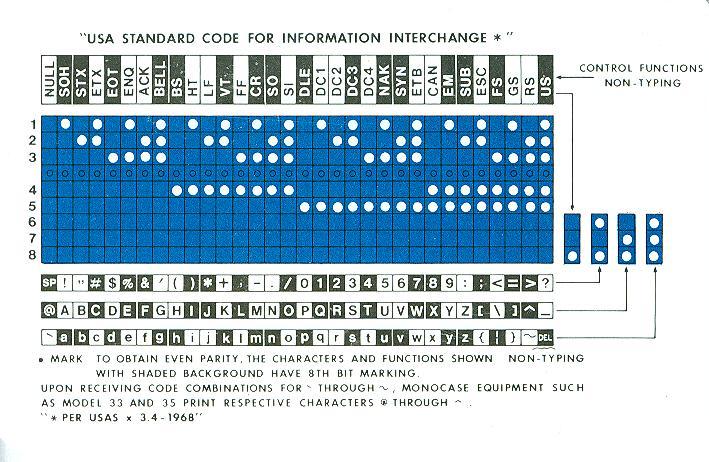
Side B
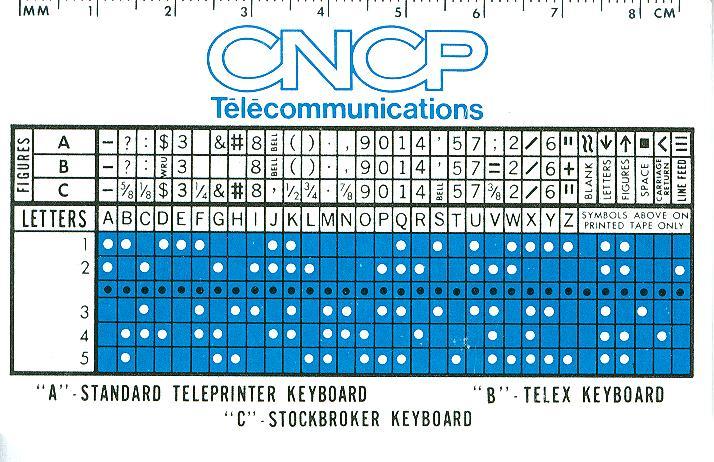
Side A
Northern Electric NE-32 Teleprinter
Contributed by Steve Ripper
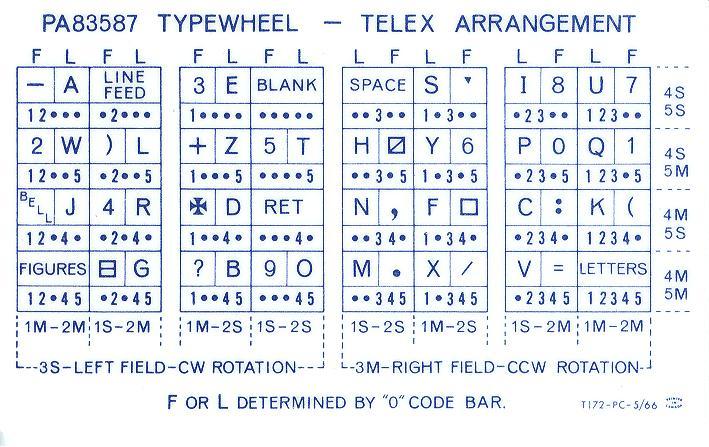
Side B
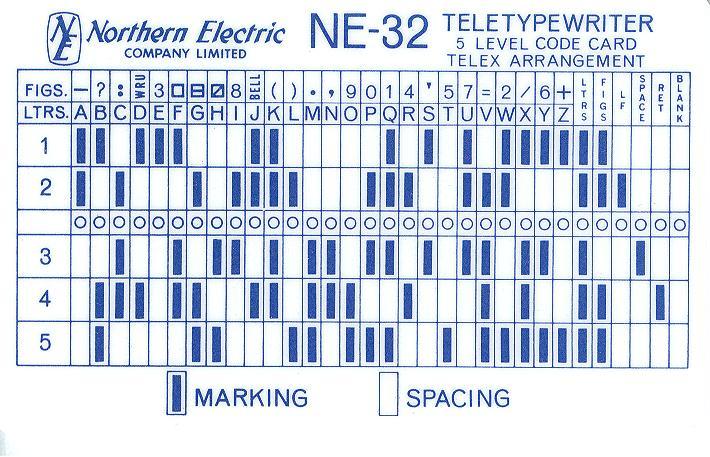
Side A
CNCP Telecommunications System Training — EBCDIC/ASCII
Contributed by Steve Ripper
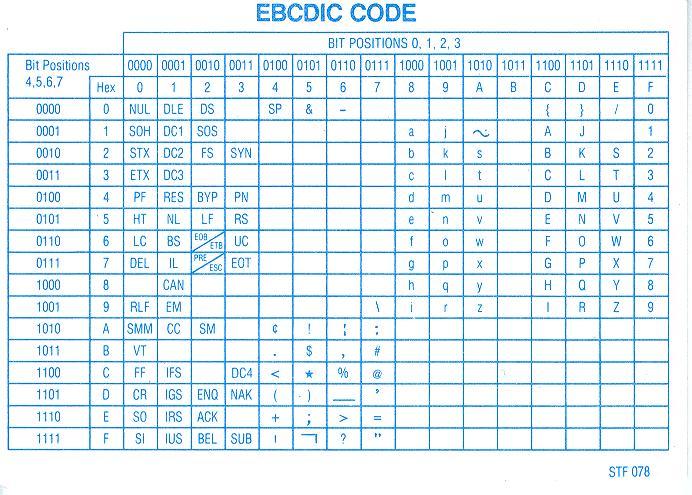
Side B
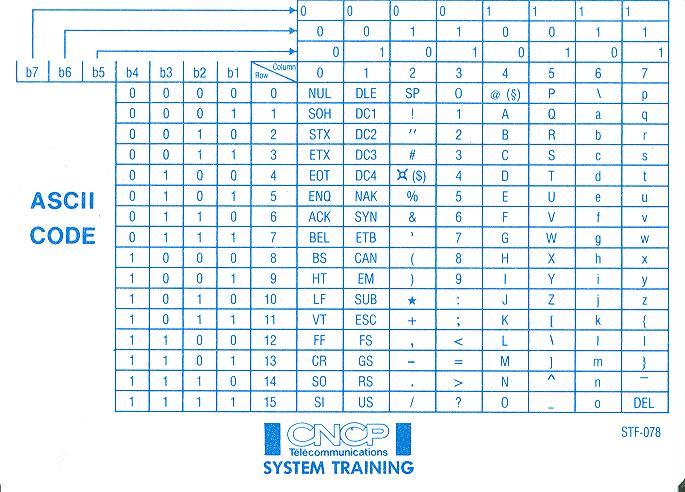
Side A
CNCP Telecommunications System Training — EIA Modem
Contributed by Steve Ripper
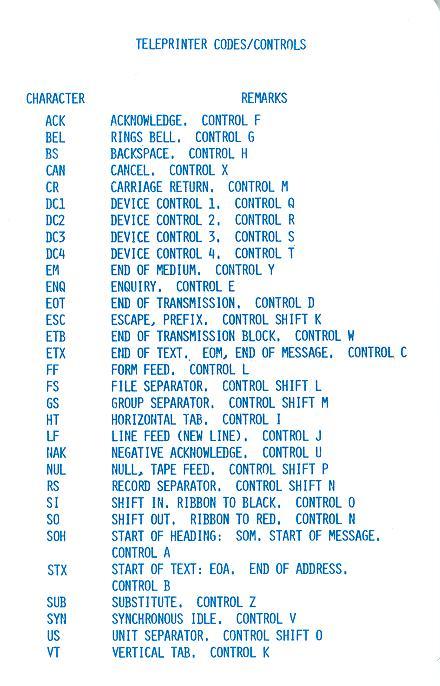
Side B
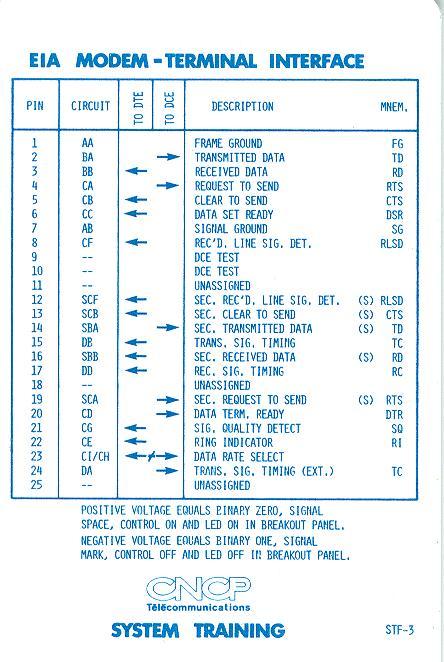
Side A
Stone Straw Corporation
Contributed by Steve Ripper
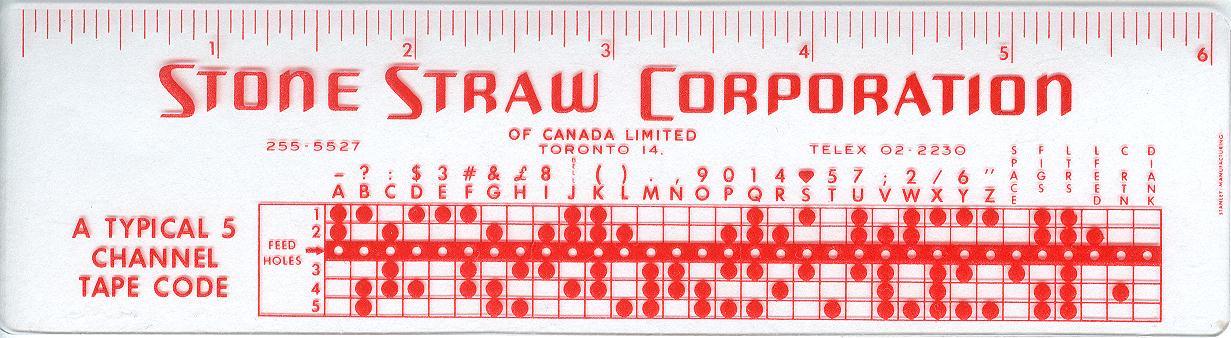
Stone Straw Corporation teletype code card